No rigging wire. No bait springs. No chin weights. Four steps and a couple of minutes, and your ballyhoo will troll the way you always thought they should.
Most ways of rigging ballyhoo for trolling ask you to build something. Pin rigs want rigging wire wrapped around the bill and through the gills. Chin weights want a separate piece of hardware. Both take practice, and both take time you'd rather spend fishing.
This method skips all of it. The bait prep is minimal, the rigging is already tied, and the whole thing comes together in a few steps — a practical alternative to pin-rigging or to buying expensive pre-rigged ballyhoo.
What you don't need
No rigging wire. No bait springs. No chin weights. A thawed ballyhoo, a two-hook rig, and a TrollTrue lure.
What you do need is a decent bait. Offshore fishing is too expensive to gamble on cheap ballyhoo — look for clear eyes, minimal blood, and baits that haven't been refrozen.
The method
Rigging the ballyhoo
Four steps, in order. Step two is the one that separates a bait that swims from a bait that drags.
Step 01
Prep the ballyhoo
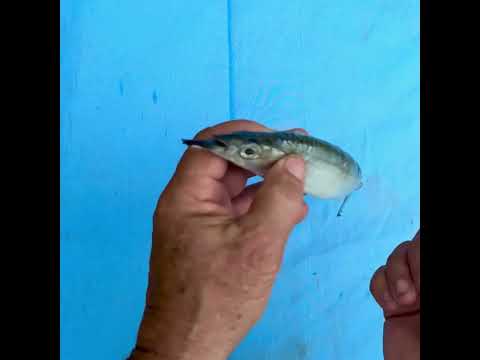
Bill clipped to half an inch, digestive tract emptied.
Thaw it thoroughly. A partially thawed ballyhoo holds a bow in its body and will not troll well, no matter what else you do right.
Clip or break off the bill, leaving about half an inch. That half inch matters later — it's what protrudes from the front of the lure.
Empty the digestive tract. Run your thumb down the ballyhoo starting just behind the gill plate, pushing the contents out through the anal opening.
Step 02
Limber the ballyhoo
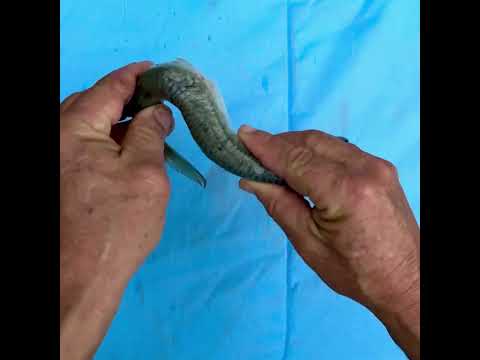
Work it back and forth in a snake-like pattern.
Work the ballyhoo back and forth in a snaking motion until the body moves freely. This is what gives the bait its action in the water.
Don't mash the flesh or try to break the backbone. Both shorten how long the bait lasts and neither improves the action.
Step 03
Attach the rigging
In under the chin, out the middle of the head just forward of the eyes.
Insert the nose hook under the chin of the ballyhoo and bring it out through the middle of the head, just forward of the eyes.
Let the trailer hook dangle freely. There's no need to embed it in the bait — that's one more job this method removes.
Step 04
Seat the lure
Half an inch of bill protruding from the front of the lure.
Slide the lure down the leader and onto the ballyhoo's head. Make sure the barb of the nose hook slides up into the slot on the lure — that's what locks the two together.
Let about half an inch of bill protrude from the opening at the front of the lure.
That's it. Your ballyhoo is ready to troll.
Where the action comes from
TrollTrue Ballyhoo Lures
The prep above gets the bait limber. What makes it swim is the keel weight moulded into the lure — it holds the ballyhoo upright and tracking straight instead of rolling over, so all that limbered body works side to side the way a live baitfish does. That's the action fish can't leave alone, and it's not something bait prep alone will give you.